Sleeper Staple Pins (Timber Dogs)


Product Description
Sleeper Staple Pins (Timber Dogs)
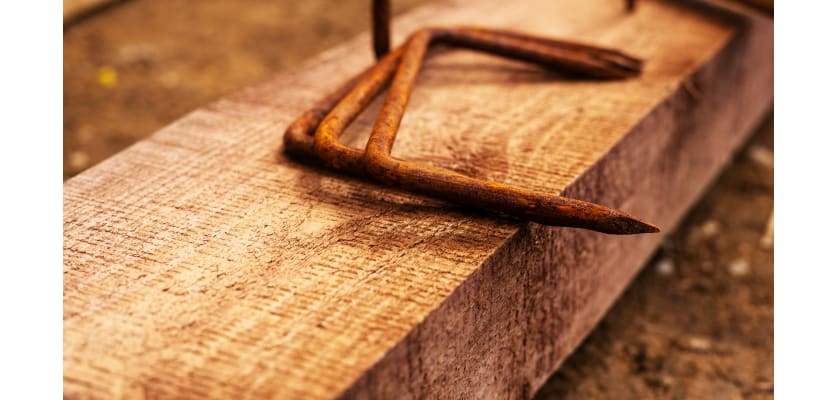
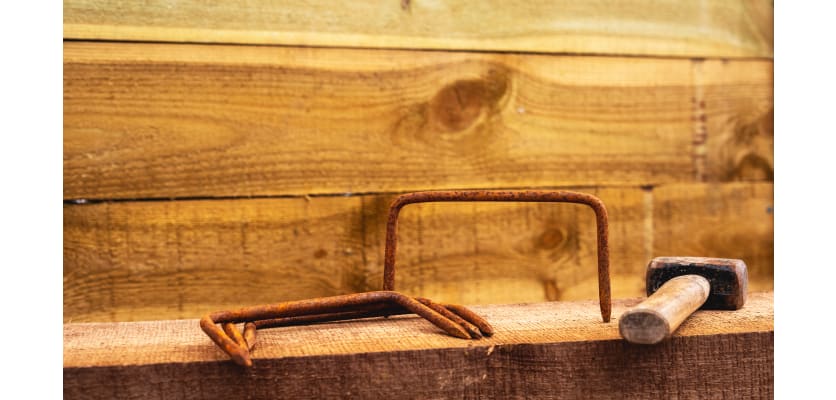
Railway sleeper staple pins, also known as timber dogs, are commonly used to secure railway sleepers together when constructing retaining walls or flower beds. These metal fasteners play a crucial role in maintaining the stability and structural integrity of such installations.
When building retaining walls or flower beds using railway sleepers, it is important to ensure that the sleepers remain securely connected to prevent shifting or movement over time. This is where staple pins or timber dogs come into play. These fasteners are typically made of galvanized steel or another durable material to withstand outdoor conditions and resist corrosion.
The Sleeper Staple Pins available from First Fence are made from heavy duty steel and they come in a weathered-rust finish.
How to use them
Here are the key steps involved in using railway sleeper staple pins or timber dogs to secure railway sleepers together: (see video)
Preparation: Begin by selecting the appropriate type and length of staple pins or timber dogs based on the dimensions and thickness of the railway sleepers being used. Measure and mark the locations where the fasteners will be inserted, considering the desired spacing and overall stability.
Drilling pilot holes: Before inserting the staple pins or timber dogs, it is advisable to drill pilot holes into the sleepers. Pilot holes help prevent splitting or cracking of the wood while driving the fasteners in. The diameter of the pilot holes should match the size of the staple pins or timber dogs being used.
Inserting the fasteners: Once the pilot holes are drilled, carefully insert the staple pins or timber dogs into the holes. Make sure to align them properly and push them in firmly until they are securely seated in the sleepers.
Securing adjacent sleepers: To connect adjacent sleepers together, place the next sleeper in the desired position, making sure it is snug against the already secured sleeper. Then, repeat the process of drilling pilot holes and inserting staple pins or timber dogs to secure the two sleepers together. This creates a strong connection between the sleepers and prevents shifting or separation.
Repeating the process: Continue this process for each additional sleeper until the desired length or height of the retaining wall or flower bed is achieved. Ensure that each sleeper is adequately secured to maintain the overall stability of the structure.
Contact us
If you have any questions about any of our products then please get in touch and one of the sales team will be happy to help you. We can be reached by calling 01283 512111 or by using the online chat system.
- Staple pins for easily connecting timber sleepers
- Manufactured from heavy-duty steel
- Weathered/rust finish
- Small - 200 x 10 x 120 (H) mm
- Large - 420 x 10 x 130 (H) mm
Specifications & Downloads
| Material | Heavy Duty Steel |
| Finish | Weathered-rust |
Specifications & Downloads
| Material | Heavy Duty Steel |
| Finish | Weathered-rust |
Product Description
Sleeper Staple Pins (Timber Dogs)
Railway sleeper staple pins, also known as timber dogs, are commonly used to secure railway sleepers together when constructing retaining walls or flower beds. These metal fasteners play a crucial role in maintaining the stability and structural integrity of such installations.
When building retaining walls or flower beds using railway sleepers, it is important to ensure that the sleepers remain securely connected to prevent shifting or movement over time. This is where staple pins or timber dogs come into play. These fasteners are typically made of galvanized steel or another durable material to withstand outdoor conditions and resist corrosion.
The Sleeper Staple Pins available from First Fence are made from heavy duty steel and they come in a weathered-rust finish.
How to use them
Here are the key steps involved in using railway sleeper staple pins or timber dogs to secure railway sleepers together: (see video)
Preparation: Begin by selecting the appropriate type and length of staple pins or timber dogs based on the dimensions and thickness of the railway sleepers being used. Measure and mark the locations where the fasteners will be inserted, considering the desired spacing and overall stability.
Drilling pilot holes: Before inserting the staple pins or timber dogs, it is advisable to drill pilot holes into the sleepers. Pilot holes help prevent splitting or cracking of the wood while driving the fasteners in. The diameter of the pilot holes should match the size of the staple pins or timber dogs being used.
Inserting the fasteners: Once the pilot holes are drilled, carefully insert the staple pins or timber dogs into the holes. Make sure to align them properly and push them in firmly until they are securely seated in the sleepers.
Securing adjacent sleepers: To connect adjacent sleepers together, place the next sleeper in the desired position, making sure it is snug against the already secured sleeper. Then, repeat the process of drilling pilot holes and inserting staple pins or timber dogs to secure the two sleepers together. This creates a strong connection between the sleepers and prevents shifting or separation.
Repeating the process: Continue this process for each additional sleeper until the desired length or height of the retaining wall or flower bed is achieved. Ensure that each sleeper is adequately secured to maintain the overall stability of the structure.
Contact us
If you have any questions about any of our products then please get in touch and one of the sales team will be happy to help you. We can be reached by calling 01283 512111 or by using the online chat system.
- Staple pins for easily connecting timber sleepers
- Manufactured from heavy-duty steel
- Weathered/rust finish
- Small - 200 x 10 x 120 (H) mm
- Large - 420 x 10 x 130 (H) mm